Igra mesta UrRoyal Game of Ur
Royal Game of Ur
Deske iz Ura so iz ok. 2600–2400 pr. n. št.; njihova prvotna pravila niso ohranjena. Tukaj igramo moderno, poenostavljeno rekonstrukcijo Finkla s sedmimi figurami in potjo s 14 polji. Veliko mlajša ploščica iz leta 177 pr. n. št. opisuje sorodno igro z dodatnimi podrobnostmi; ni neposreden pravilnik za te starejše deske.
Ur’s boards date to c. 2600–2400 BCE; their original rules are lost. Here we play the modern simplified Finkel reconstruction with seven pieces and a 14-square route. A much later tablet from 177 BCE describes a related game with additional details; it is not a direct rulebook for these earlier boards.
Spravi vseh 7 figur po poti in z deske. Prvi, ki mu to uspe, zmaga. Get all 7 of your pieces along the path and off the board. First to do it wins.
PotezaYour turn
Vrzi vse 4 kocke in preštej označene konice. To je tvoj premik, od 0 do 4. Premakni eno figuro za toliko polj naprej po svoji poti, ali vstopi novo figuro na desko.
Roll all 4 dice and count the marked corners. That is your move, from 0 to 4. Move one piece that many squares along your path, or enter a new piece onto the board.
Vsaka figura prehodi 14 polj: po tvoji vrsti navznoter, čez skupno sredinsko vrsto in ven. Če vržeš 0 ali nimaš veljavne poteze, potezo izpustiš. Na svojo figuro ne smeš stopiti.
Every piece travels 14 squares: inward along your own row, across the shared middle row, and out again. Roll 0 or have no legal move and you skip. You cannot land on your own piece.
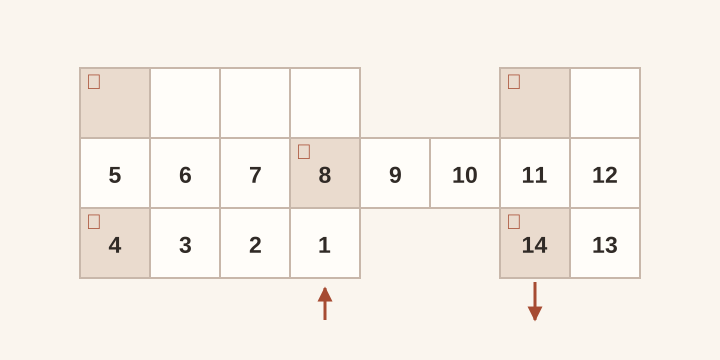
Rozete, lovljenje in izstop Rosettes, capturing and bearing off
Rozete. Na deski jih je 5. Ko pristaneš na rozeti, takoj vržeš še enkrat, figura pa je tam varna in je ni mogoče ujeti. Na zasedeno rozeto ne moreš stopiti, tudi če je nasprotnikova.
Rosettes. There are 5. Landing on one gives you an immediate extra roll, and the piece is safe there and cannot be captured. You cannot land on an occupied rosette, not even the opponent's.
Lovljenje. Če v sredinski vrsti pristaneš na nasprotnikovi figuri, gre ta z deske in mora začeti znova. Tvoja lastna vrsta je varna; nasprotnik tja ne more.
Capturing. Land on an opponent's piece in the middle row and it goes back off the board to start again. Your own row is safe, and the opponent cannot reach it.
Izstop. Da figura zapusti desko, potrebuješ natančen met. Če ji manjka 1 polje, potrebuješ met 1. Prevelik met zanjo ne velja. Prvi, ki spravi z deske vseh 7 figur, zmaga.
Bearing off. A piece needs an exact roll to leave the board. If it needs 1 more square, you must roll exactly 1. Too high does not work. First to bear off all 7 pieces wins.
Priprava Setup
Deska z 20 polji · 7 svetlih in 7 temnih figur · 4 tetraedrske kocke, vsaka z 2 označenima konicama od 4.
A 20-square board · 7 light and 7 dark pieces · 4 tetrahedral dice, each with 2 marked corners out of 4.
Vse figure začnejo zunaj deske. Za prvega igralca vrzita kocke; višji met začne. Brez kock lahko uporabiš 4 kovance: cifra šteje 1, grb 0.
All pieces start off the board. Roll to see who goes first, highest starts. With no dice, use 4 coins: heads counts 1, tails counts 0.
Ista deska, različne potiOne board, different routes
Številke pomenijo mesta na poti, ne vrednosti polj. Vstop šteje kot premik na polje 1, izstop pa kot naslednji korak za zadnjim poljem. Drugi igralec uporablja zrcaljeno pot. Pred igro izberita celoten profil: pot in pravila kock sodijo skupaj.
Numbers show route positions, not square values. Entering counts as moving to square 1; bearing off is one step beyond the last square. The other player mirrors the route. Choose a complete ruleset before playing: route and dice rules belong together.
| ProfilProfile | Pot in pomembna razlikaRoute and key difference |
|---|---|
| Finkel | 14 polj; 4 binarne kocke; 7 figur; skupna sredinska rozeta je varna. Privzeto tukaj.14 squares; 4 binary dice; 7 pieces; shared centre rosette is safe. Default here. |
| R. C. Bell | Ista pot s 14 polji, vendar starejši profil uporablja drugačno vrednotenje 3 kock in vstop na 5. Ista pot ne pomeni istih pravil.Same 14-square route, but an older profile uses a different three-dice mapping and entry on 5. Same route does not mean same rules. |
| J. Masters | 16 polj; pri predzadnjem sredinskem polju zavije okoli zgornjega bloka. S 3 binarnimi kockami nič označenih pomeni 4.16 squares; turns at the penultimate centre square around the upper block. With 3 binary dice, no marks means 4. |
| H. J. R. Murray | 27 polj; po obhodu končnega bloka se vrne po sredinski vrsti in izstopi pri vhodu. Zgodovinski predlog, ne dokaz prvotne poti.27 squares; circles the end block, returns along the middle row and exits near entry. A historical proposal, not proof of the original route. |
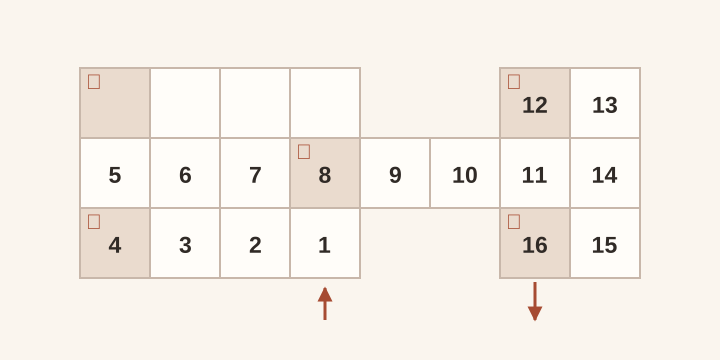
Primerjava rekonstrukcij: Masters Traditional Games. Predlogi niso dokaz ene izvirne poti.
Reconstruction comparison: Masters Traditional Games. These proposals do not establish one original route.
Viri: Britanski muzej, deska iz Ura · Irving Finkel, »On the Rules for the Royal Game of Ur«, v: Ancient Board Games in Perspective, British Museum Press 2007 · royalur.net. Diagram je izviren.
Sources: British Museum, the Ur board · Irving Finkel, “On the Rules for the Royal Game of Ur”, in: Ancient Board Games in Perspective, British Museum Press 2007 · royalur.net. The diagram is original.
Celotna vsebina te strani, v izbranem jeziku, z vsemi odprtimi razdelki.The complete page in your chosen language, with every section expanded.